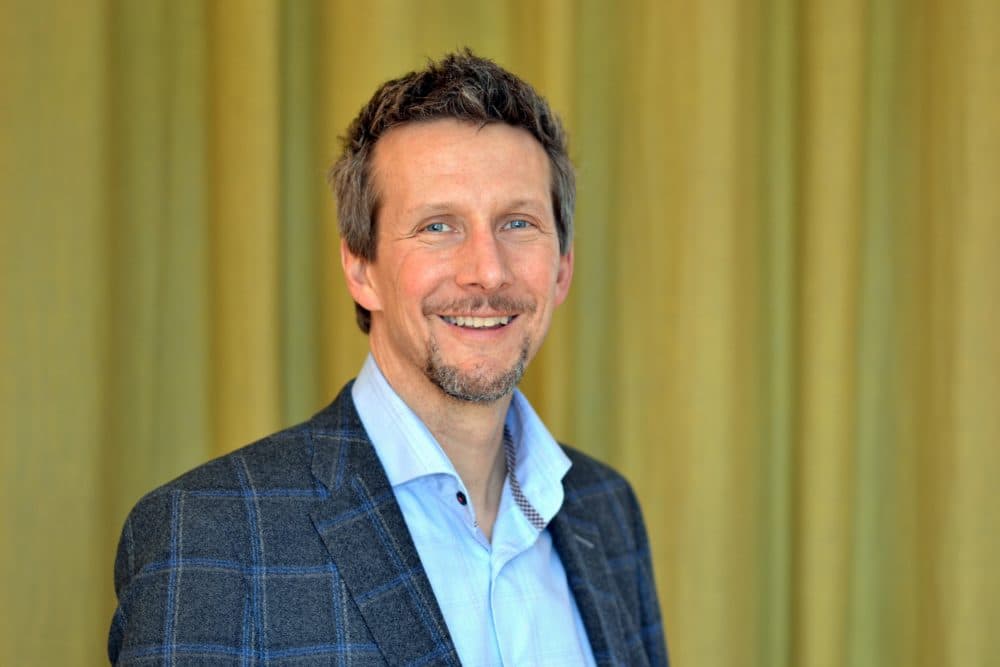
Few scientists have changed how endurance athletes actually train. Prof. Stephen Seiler is one of them. His analysis of how elite rowers, skiers and cyclists distribute intensity produced the model most coaches now argue about, copy, or deliberately reject.
He has been on the Roadman Cycling Podcast more than once, and each appearance moves the conversation forward rather than repeating the hits. This page is the full archive, in order, with what to take from each.
If you only know the phrase "80/20" and nothing else, start at the top and work down.
Who Prof. Stephen Seiler is
Seiler is an American-born exercise physiologist who moved to Norway in the 1990s and is now based at the University of Agder. His career sits at the intersection of sport science and applied coaching, which is why practitioners take him seriously in a field where academics are often ignored.
His most-cited work examines how elite endurance athletes actually distribute training intensity across a season. The pattern he documented — roughly 80% of sessions easy, around 20% hard, very little in between — became known as polarised training. That model has since been tested, refined, and argued about in cycling, running, triathlon, rowing and cross-country skiing.
What makes Seiler different from most researchers is how he writes and speaks. He favours concrete examples over jargon, he is happy to be wrong in public, and he actively engages with coaches rather than hiding behind papers. Full background sits on Prof. Stephen Seiler's guest page.
Every Roadman episode, in order
The origin of polarised training. Seiler walks through how he first noticed the 80/20 pattern, what the Norwegian data actually showed, and why intensity distribution matters more than any single session. Key takeaway: the model came from observation of what worked, not from a lab hypothesis.
Session design and interval structure. A deeper conversation on how to build a high-intensity session that actually drives adaptation. Seiler explains why 4x8-minute and 4x16-minute intervals recur in elite programmes, and why time-at-intensity matters more than peak wattage.
Threshold testing and the two-threshold model. He breaks down LT1 and LT2, why the first lactate turn is the one most amateurs never measure, and how to approximate it without a lab using talk test and heart rate drift. If you haven't mapped your own zones yet, the heart rate zone calculator is a useful starting point before you listen.
Amateur application and the 6-hour problem. The most practical conversation. Seiler directly addresses what riders training 4 to 8 hours per week should do, and why copying a World Tour distribution into a 300-hour year usually backfires.
Recovery, durability and the long view. A conversation about what separates a 5-year athlete from a 15-year athlete. Durability, aerobic base, and the cost of chasing every block too hard.
The running thread across all five is that intensity distribution is a long-term tool, not a weekly template.
The polarised-training arc across episodes
Seiler's view has evolved across his Roadman appearances, and that evolution is worth tracking. The first episode is the cleanest statement of the model. The second and third add nuance on how sessions are built and how thresholds are identified in practice.
By the fourth episode the conversation has shifted. Seiler openly concedes that the strict 80/20 split is a description of elite training, not a prescription for working amateurs. Riders with 6 hours per week often lack the absolute low-intensity volume for polarised to work, and a pyramidal or sweet-spot-weighted distribution produces more fitness per hour.
The fifth episode closes the loop. The point was never the ratio itself — it was that elite athletes accumulate enormous easy volume without burning out, because they police intensity on easy days. Most amateurs ride their easy days too hard and their hard days too soft. Fix that, and the label matters less.
That progression is exactly why we wrote polarised vs sweet spot training, which maps Seiler's framework against Joe Friel-style sweet-spot models and explains which one fits which rider.
The one episode to start with
If you have 90 minutes, listen to the origin-of-polarised-training appearance. It is the clearest explanation of polarised training you will hear anywhere, from the person who named it. Once you understand why the model exists — observation of elite data, not a lab experiment — the rest of his work reads differently.
From there, the amateur-application conversation is the most useful for a working rider. Seiler is unusually honest about the limits of his own model for amateurs, and that honesty is the reason to trust him on the rest.
Next step: queue the origin appearance from the podcast archive, ride easy while you listen, and audit your last four weeks of training. Count the sessions that were easy, hard, and stuck in the middle. That ratio is the first number worth changing.
For the long-form synthesis of Seiler's research, see Stephen Seiler research lessons and what Stephen Seiler says about polarised training. The polarised training cycling guide is the day-to-day translation, and the zone 2 complete guide covers the easy 80%.
If you'd rather have someone build the polarised week around your data, NDY coaching at Roadman is built around exactly this brief — the application is where the conversation starts. Got a specific question after listening — your own session schedule, where the grey zone is hiding in your week, how to interpret HR drift? Ask Roadman for an answer drawn directly from these episodes.