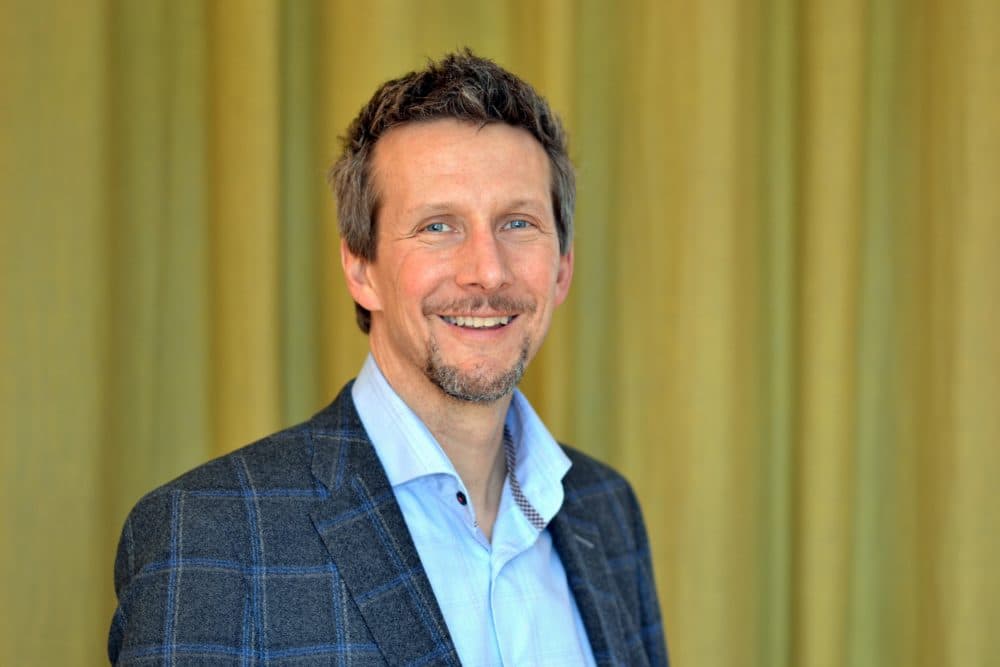
The argument about polarised training has gone on long enough that the original position has been blurred by the people quoting it. So this article does one thing: it lays out what Prof. Stephen Seiler actually says about polarised training, drawn from his appearances on the Roadman Cycling Podcast and his published work. Not what coaches infer he meant. What he says.
Going deeper? This piece is the podcast-distilled positions. For a paper-by-paper walk through Seiler's published research — including the 2007 autonomic study and the 2024 HIIT piece he says is his proudest work — read What I Learned Reading Every Stephen Seiler Paper.
If you have only heard the phrase "80/20" and nothing else, this is the framework underneath it.
Who Prof. Seiler is and why his positions matter
Stephen Seiler is the American-born exercise physiologist based at the University of Agder in Norway who codified polarised training after analysing how elite endurance athletes actually distribute intensity. His work spans rowing, cross-country skiing and cycling and has shaped training practice at World Tour level for two decades.
What separates Seiler from the people quoting him is that he does not treat 80/20 as a closed system. He has pushed back on his own model in print and on the podcast where the evidence warrants it, and that intellectual honesty is the reason most coaches who work at the top of the sport take him seriously. Full background sits on Prof. Stephen Seiler's guest page, and every Roadman appearance is catalogued in Every Episode with Prof. Seiler.
Position one — most amateurs ride easy days too hard
The single position Seiler returns to in every podcast conversation is this: the easy day is the part of the model amateurs get wrong, and almost everything else flows from that error.
Elite athletes accumulate enormous volumes of low-intensity work because they police easy days with discipline. They ride at heart rates that look almost embarrassing — heart rate ranges that recreational riders would dismiss as recovery effort. That discipline is what makes the hard sessions work.
The amateur version of this is the grey-zone ride: 75 to 85% of FTP, conversational only in short bursts, heart rate drifting above LT1, perceived effort moderate. It feels productive. It is the most common reason a cyclist trains for years and stops improving.
Seiler's fix is direct. Cap your easy rides at LT1 — the first lactate threshold — and stay there. Use heart rate, the talk test, or perceived effort. The session does not have to feel impressive. It has to feel almost too easy.
This is the ground from which polarised training actually pays off.
Position two — 80/20 describes elite training, it does not prescribe yours
The strongest pushback on polarised training comes from time-crunched athletes and their coaches: if you only have six hours a week, you cannot afford to spend five of them at low intensity, because the absolute volume is too small to drive adaptation.
Seiler agrees. He has stated this directly on the podcast more than once. The 80/20 split is a description of how elite athletes distribute training across a 25–30 hour week. It is not a prescription that survives intact when ported into a 6-hour amateur week.
What does survive across every category of athlete is the principle: easy days must be easy, hard days must be hard, the grey zone is where progress goes to die. The ratio is contingent on your hours and your event. The principle is not.
This is exactly why we wrote polarised vs sweet spot training — because the nuanced version of Seiler's position is that the model adjusts to the rider, and the rider does not have to adjust to the model.
Position three — LT1 is the threshold most amateurs never measure
If you have ever set training zones from a 20-minute FTP test, you have a pretty good fix on LT2 and almost no information about LT1. Seiler's two-threshold framework treats LT1 — the first lactate turn — as a separate, equally important number.
LT1 is the upper boundary of properly easy riding. Above it, you are no longer recovering. Below it, you are accumulating the aerobic adaptations that let you tolerate harder work later. Most amateurs never identify it because they do not test for it and because the metric does not appear on their head unit.
The practical fixes Seiler discusses on the podcast are not laboratory-bound:
- Talk test. If you cannot hold a full conversation across the ride, you are above LT1.
- Heart rate drift. A steady 60-minute aerobic ride at true LT1 should drift less than 5% in heart rate from the first half-hour to the second.
- Step protocol. A field-based step test with 4-minute stages can identify the heart rate at which lactate first rises noticeably from baseline.
Once you have a working LT1 figure, the easy-day discipline gets dramatically easier. Plug it into the HR zones calculator to set your ceilings. You stop arguing with yourself about whether you are easy enough — you have a number.
Position four — hard sessions are time-at-intensity, not peak power
The other position Seiler returns to is how hard sessions are designed. The amateur instinct is to maximise peak wattage — go as hard as possible on the first interval, fade through the rest, accept the average as a reflection of effort. Seiler argues the opposite.
The sessions he references most often are familiar to anyone who has done them: 4×8 minutes at LT2, 4×16 minutes just below it, with recoveries short enough that heart rate and lactate stay elevated across the set. The aim is the total dose of work performed above LT2, not the wattage on the first rep.
This reframes how to pace a session. If you cannot hold the target across all four intervals, the target is wrong, not the rider. Holding 320 watts across four intervals does more for your sustainable threshold than 360 on rep one and 290 on rep four.
It also explains why elite athletes sometimes look conservative on their first interval. They are not pacing for the first. They are pacing for the fourth.
Position five — the polarised vs sweet-spot debate is a diagnostic, not a binary
The most useful evolution in Seiler's position is the one he has worked through across his Roadman appearances. The earliest framing was strict 80/20 polarised. The current framing has more texture, and is worth quoting in shape if not in exact words.
Polarised distribution is the right model for a high-volume athlete who accumulates aerobic base across years and needs to protect it from grey-zone drift. Sweet-spot weighting can be the right model for a working amateur with limited hours whose absolute easy volume is too small to deliver on its own, and who needs the higher density of stimulus that 88–93% of FTP work provides.
The diagnostic question Seiler effectively asks is: where does your training fail? If it fails on the easy day — too hard, too often, no genuine recovery — polarised will help you most because it forces the discipline. If it fails on the hard day — not enough quality, sessions too soft to drive adaptation — sweet-spot weighting may serve you better in the short term.
Either way, the answer is not "pick a tribe." It is "diagnose your weakest link and adjust the distribution to fix it." That is a coaching position, and one of the reasons Joe Friel-style sweet-spot models and Seiler-style polarised models can both be right depending on the rider.
How to apply Seiler's positions this week
A practical translation, in five steps you can take inside a single training week:
- Audit your last four weeks. Count rides by intensity. How many were properly easy (below LT1, talk test passed throughout)? How many were properly hard (clearly above LT2 with intent)? How many were grey zone? The ratio is the first number worth changing.
- Set a working LT1. Use a 60-minute aerobic ride with a heart-rate cap, the talk test, or a field step test. Cap your easy rides there for the next four weeks.
- Rewrite one hard session as time-at-intensity. Replace the "as hard as you can" prescription with a 4×8 or 4×16 at a target you can hold across every interval. If you cannot, lower the target.
- Drop one grey-zone ride a week. Replace it with a properly easy ride or a clearly hard one. Do not let it survive on autopilot.
- Retest in eight weeks. Look at your sustainable power at heart rate, not just your peak. The signal that the model is working shows up there before it shows up in FTP.
If this is the part of your training where you keep getting stuck, that is exactly the gap Roadman coaching closes. Not Done Yet gives you a personalised TrainingPeaks plan reviewed weekly, live group coaching with Anthony, and the accountability to keep the easy days easy. It is built around the principles Seiler argues for, not a generic plan. The Roadman Inner Circle is the separate option for daily review and direct 1:1 access.
Where to go next
If you want the full archive, Every Episode with Prof. Stephen Seiler is the chronological catalogue of his Roadman appearances. If you want the broader coaching consensus on how to apply these ideas, What 25 Top Coaches Agree On About Improving FTP maps Seiler's framework against the coaches who use it in practice. And if you want the side-by-side, polarised vs sweet spot training is the article that lays out the trade-off in full.
The summary, if you only take one thing: Seiler's model is not 80/20 — it is "easy days easy, hard days hard, nothing in the middle by accident." Get that part right and the ratio sorts itself out.
Got a specific question after reading Seiler's framework — your own session schedule, where the grey zone is hiding in your week, how to interpret your HR drift? Ask Roadman for an answer drawn directly from these podcast conversations. And for the practical translation into a Zone 2 ride, see the zone 2 complete guide; for the methodology debate, see polarised vs sweet spot training.