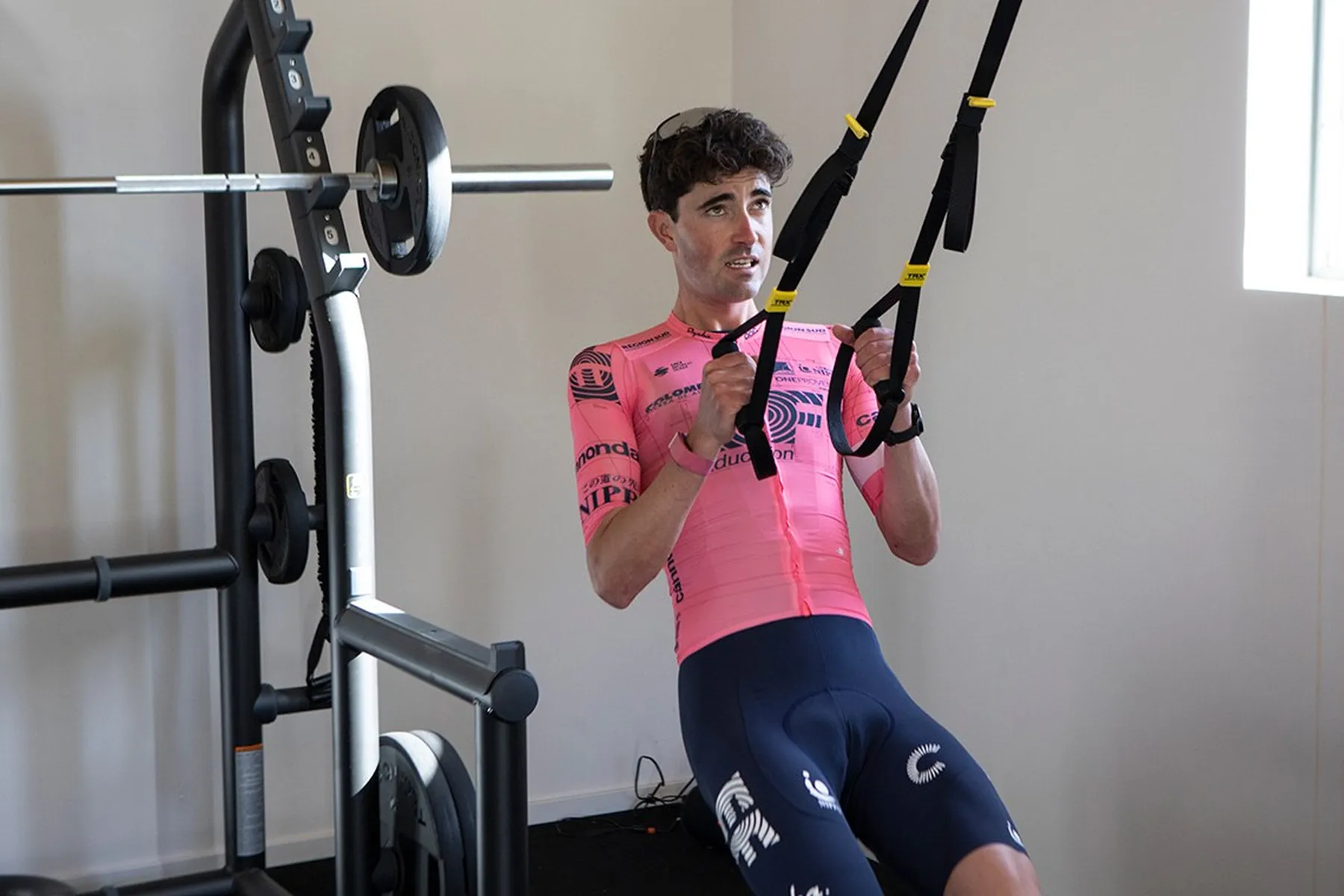
Base training means 6-12 weeks of riding at Zone 2 intensity (55-75% FTP — find your exact Zone 2 range) for 80%+ of your training time, with no threshold or VO2max intervals. This builds mitochondrial density, expands your capillary networks, and improves fat oxidation — the aerobic adaptations that everything else depends on. Add 2-3 gym sessions per week during this phase. It's the least exciting but most important phase of the training year.
Base training is the phase most amateur cyclists rush through, skip, or do badly. Get it right and everything that follows — your threshold work, your VO2max intervals, your race sharpness — sits on solid ground. Get it wrong and you spend April wondering why your intervals feel harder than they should.
What Base Training Actually Does
When you ride at Zone 2 intensity for sustained periods, several key adaptations happen:
Mitochondrial biogenesis. Your body creates more mitochondria in your muscle cells. More mitochondria means more aerobic energy production capacity. This is the literal engine expansion that makes everything else work.
Capillary development. New blood vessels form around your muscle fibres, improving oxygen delivery and waste removal. Better plumbing, better performance.
Fat oxidation improvement. Your body becomes more efficient at using fat as fuel, sparing glycogen for when you really need it. This is why base-trained cyclists can ride longer before bonking. Our zone 2 training guide for cycling covers the fat-oxidation mechanism in detail.
Cardiac efficiency. Your stroke volume increases — each heartbeat pumps more blood. This is why resting heart rate drops during base training.
How Long Should Base Phase Be?
For most amateur cyclists, 6-12 weeks of dedicated base work is appropriate. The exact duration depends on:
- Your training history. First year of structured training? Go longer (10-12 weeks). Third year? Shorter is fine (6-8 weeks).
- Your target event date. Count backwards from your event: 4 weeks taper, 6-8 weeks build, remainder is base. That backwards count only works once you've fixed the event itself, which is where cycling goal setting that actually works earns its place — the 3-layer framework gives you the A-race date the whole plan hangs off.
- Your consistency. A 6-week base phase done perfectly beats a 12-week base phase interrupted by illness, travel, and missed sessions.
What a Base Training Week Looks Like
For an 8-10 hour/week cyclist:
Monday: Rest
Tuesday: 90 minutes Zone 2 (or indoor equivalent)
Wednesday: 60-90 minutes Zone 2 + gym session
Thursday: 90 minutes Zone 2 with 10-15 minutes of Zone 3 tempo to keep some sharpness
Friday: Rest or 30-minute easy spin + gym session
Saturday: Long ride 3-4 hours at Zone 2
Sunday: 60-90 minutes easy (Zone 1-2), social ride
Key rule: At least 80% of all training time in Zone 1-2. No threshold work. No VO2max intervals. Not yet.
That week isn't a one-off — you repeat it across a block, progressively loading it before a recovery week. That repeating block is the unit of training that actually drives adaptation, and mesocycle training explained breaks down the 4-week structure your base weeks should sit inside.
The Ego Problem
Base training requires you to ride slowly. On purpose. For weeks. This is hard for competitive people. When someone passes you, you let them go. When there's a Strava segment, you ignore it. When your training partners want to race, you wave goodbye.
Professor Seiler's research on training intensity distribution in elite endurance athletes is clear on this: the athletes who maintain discipline during base training produce better results when intensity is added later. The ones who sneak in hard efforts during base phase compromise both the base adaptations and their recovery for the work that matters.
I had to learn this myself. For years I'd go out for a "Zone 2 ride" and come back with an average heart rate 15 beats above where it should have been because I couldn't resist chasing a wheel or hammering up a hill. The moment I actually committed to riding easy — properly, boringly, ego-crushingly easy — the results in my next build phase were noticeably different.
Signs Your Base is Working
After 4-6 weeks of proper base training:
- Heart rate at the same power decreases (cardiac efficiency improving) — track this with your heart rate zones
- You feel less fatigued after long rides
- Your perceived exertion at Zone 2 drops
- Power at Zone 2 heart rate increases
- Resting heart rate decreases
These are measurable. Track them weekly. They're the evidence that your aerobic engine is expanding. Logging the block in TrainingPeaks makes the trend easy to see — your CTL ticks up steadily across the weeks, and the PMC confirms the base is being laid by patient accumulation rather than the odd big week.
Key Takeaways
- Base training builds the foundation everything else rests on
- 6-12 weeks of dedicated Zone 2 work (80%+ of training time)
- Key adaptations: mitochondria, capillaries, fat oxidation, cardiac efficiency
- No threshold or VO2max work during base phase — it compromises the adaptations
- The ego problem is real — discipline to ride slow is the hardest part
- Track heart rate at fixed power weekly to measure progress
- The long Saturday ride (3-4 hours) is the most important session
- For the full annual plan, see our periodisation guide
- Use the FTP Zone Calculator to set accurate Zone 2 power targets
- Base training transitions into the build phase — our winter training guide covers the dose and timing
- New to structured training? Our interval training for beginners guide covers how to introduce intensity after your base phase
- Building toward a long target event? See our gran fondo training plan or Ride London training plan
- Returning after a layoff? Our 12-week comeback rider plan is built on the same base-first principles
- New to coaching and not sure when to commit? See cycling coaching for beginners — when you're ready
- Considering our paid community? Read the Not Done Yet coaching review for what members actually get
Free Base Plan Template (inside the Community)
We host a free library of plan templates inside the Roadman Cycling community on Skool — base plans, build plans, VO2 max blocks, FTP builder plans, plus dedicated sportive, road race and gravel templates. The base plan follows the 80/20 intensity distribution this article describes. Grab it, slot it into your calendar, and you have a structured 8-12 week aerobic build for free. Free to join.
Frequently Asked Questions
How long should a cycling base phase be?
6-12 weeks depending on your experience level and goals. Beginners and those returning from a break benefit from a longer 10-12 week base. Experienced cyclists with a strong aerobic foundation can use a 6-8 week base phase before introducing intensity.
What should you do during base training?
80% or more of your training should be Zone 2 (55-75% FTP). Focus on long, steady rides — the Saturday 3-4 hour ride is the most important session of the week. No threshold or VO2max intervals during base phase. Add 2-3 strength sessions per week in the gym.
Can you do intervals during base training?
Traditional base training avoids high-intensity work entirely. The aerobic adaptations (mitochondrial density, capillary growth, fat oxidation) are maximised when training stress comes from volume, not intensity. Introducing intervals too early compromises these adaptations.
How do I know if my base training is working?
Track these metrics weekly: heart rate at a fixed power (should decrease), power at Zone 2 heart rate (should increase), resting heart rate (should decrease), and perceived exertion at Zone 2 pace (should feel easier). Changes are measurable within 4-6 weeks.
Where do I go from here?
For deeper detail, see the zone 2 complete guide, polarised training cycling guide, reverse periodisation cycling, and the periodisation guide.
If you'd rather have someone build the base phase around your event date, Not Done Yet coaching at Roadman writes that around your week. The application is where the conversation starts. Got a specific question — your own base length, when to add intensity, what to do about a missed week? Ask Roadman for an answer drawn from the actual coach and physiologist conversations on the podcast.
Related reading: Winter Base Training: Why Pure Zone 2 Alone Isn't Enough (The Modern Approach)