THE FULL CATALOGUE
960 articles across 20 pagesWHAT WATTAGE SHOULD YOU RIDE IN AN IRONMAN?
The real answer to 'what watts should I ride at Ironman' is 'it depends on these five things'. Here's how to calculate your exact target wattage.
FRED WHITTON CHALLENGE TRAINING PLAN: 12 WEEKS FOR THE HARDEST SPORTIVE IN BRITAIN
The Fred Whitton stacks five of the hardest climbs in Britain into 180km. Kirkstone, Honister, Newlands, Wrynose and Hardknott. This plan gets you over Hardknott with something left for the run-in.
RIDE LONDON TRAINING PLAN: HOW TO TRAIN FOR THE 100-MILE CLOSED-ROAD SPORTIVE
Ride London is flatter than most sportives and that is exactly what catches people out. This plan builds the aerobic depth, group-riding economy and pacing to finish strong, not just survive.
RING OF BEARA TRAINING PLAN: 12 WEEKS FOR THE HEALY PASS
The Ring of Beara is 140km of Wild Atlantic Way with two serious climbs stacked into the second half. This plan gets you over the Healy Pass with legs left for the run home.
WICKLOW 200 TRAINING PLAN: A 12-WEEK BUILD FOR IRELAND'S TOUGHEST SPORTIVE
The Wicklow 200 asks for 200km and 3,000m of climbing across the hardest terrain in Leinster. This plan gets you to Sally Gap with legs intact and enough left to ride home.
HOW TO CHOOSE AN ONLINE CYCLING COACH: THE 9-POINT CHECKLIST
There is no single best online cycling coach. Use this nine-point checklist to find the coach, service level and working relationship that fit you.
ACTIVE RECOVERY RIDES FOR CYCLISTS: WHEN THEY HELP AND WHEN REST WINS
A recovery ride can loosen stiff legs and preserve routine, but it is not a lactate-flushing shortcut. Here is how to keep it genuinely easy—and when not to ride.
CYCLING COACHING FOR BEGINNERS: YOU PROBABLY DON'T NEED A COACH YET
Most beginner cyclists don't need a coach. They need consistency, structured riding, and a community. Here's how to know when you've outgrown that and are actually ready for coaching.
CORE EXERCISES FOR CYCLISTS: A PRACTICAL 15-MINUTE ROUTINE
A short, adaptable trunk routine for cyclists. Build control and endurance without pretending one exercise transfers watts, prevents injury or replaces progressive strength training.
THE SATURDAY SPIN
Get the week's training takeaways in one email.
30,000+ serious cyclists. What worked this week, what the pros did differently, and how to apply it.
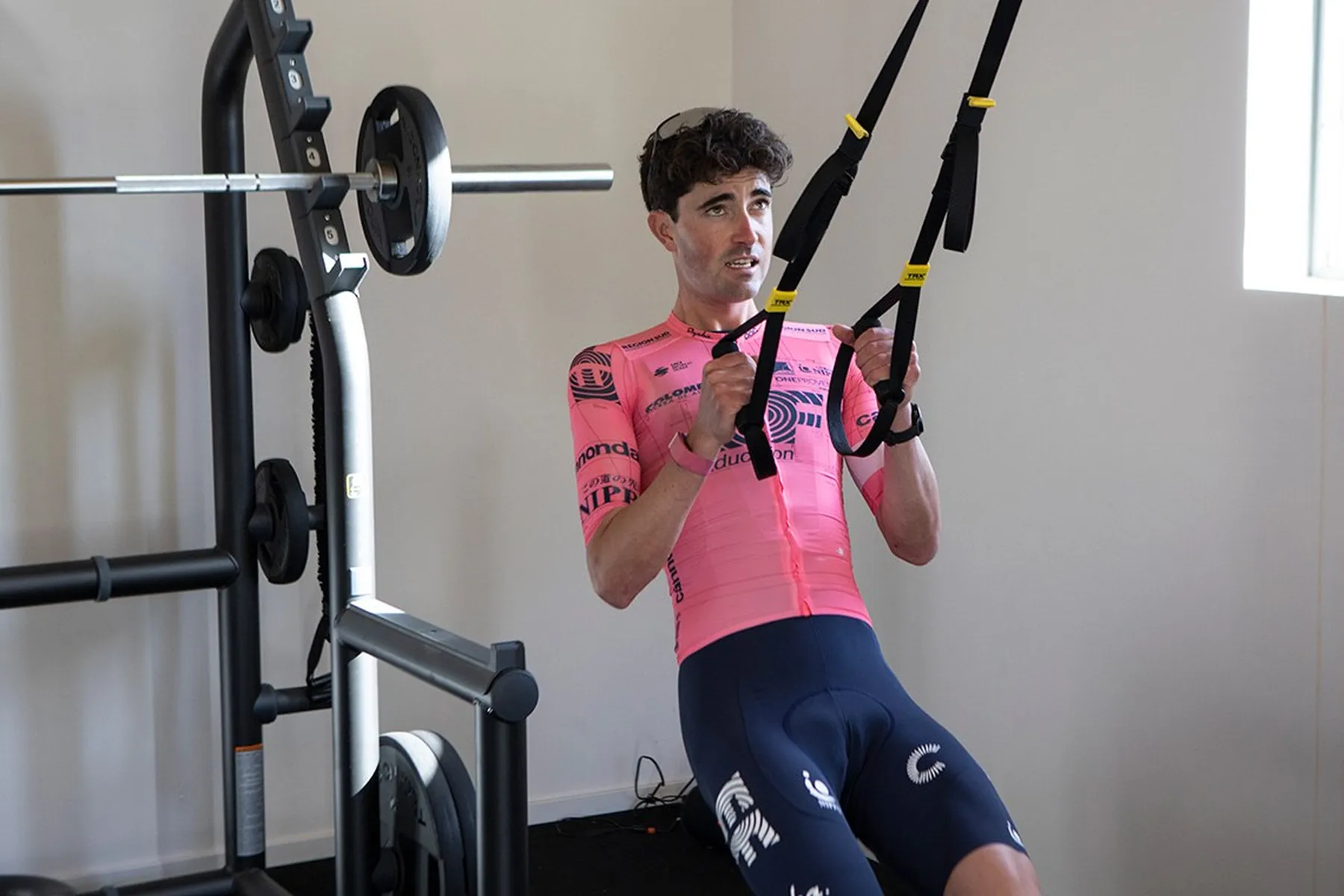
GYM EXERCISES FOR CYCLISTS: HOW TO CHOOSE AN EFFECTIVE ROUTINE
No review proves eight mandatory cycling exercises. Build a small routine from useful movement patterns, then judge it by strength and riding outcomes.
HRV FOR CYCLISTS: HOW TO MEASURE AND USE IT
HRV can add context to a cycling training decision, but it is not a recovery diagnosis or a universal green light. Learn how to measure consistently, interpret your own pattern and act without chasing one number.
LEG DAY FOR CYCLISTS: DOES CYCLING COUNT AND WHEN TO RIDE?
Cycling trains the legs, but it is not the same stimulus as progressive resistance training. This guide separates the goals and shows how to fit both.
MTB HEART RATE ZONES: WHY THEY'RE DIFFERENT FROM ROAD CYCLING ZONES
If you take your road heart rate zones onto an MTB, you'll think you're always in zone 4. You're not. MTB shifts heart rate in predictable ways that your training needs to account for.
MTB NUTRITION: HOW TO ACTUALLY FUEL ON THE TRAIL
MTB fuelling is harder than road fuelling. Rough terrain, limited storage, and the fact that you cannot take your hand off the bars for three minutes at a time. Here's how to actually do it.
MTB VS ROAD CYCLING FITNESS: WHICH ACTUALLY BUILDS MORE FITNESS?
Road cycling is the better pure aerobic tool. MTB builds strength endurance and punchy power road riding cannot touch. Here's the no-nonsense breakdown of what each does — and why riders who do both get further.
TRIATHLON AERO POSITION: HOW TO ACTUALLY MAKE IT FASTER, NOT JUST LOOK PRO
Slamming the pads and going low doesn't make you faster. A position you can hold, fuel and run off does. Here's how to actually make your triathlon aero position faster on the clock, not just in photos.
TRIATHLON BIKE NUTRITION: HOW TO FUEL THE BIKE LEG WITHOUT WRECKING THE RUN
The bike leg is where you either fuel the run or blow it. Here are the carb targets that actually work for 70.3 and Ironman — and the exact timing that keeps your gut working when others start walking.
TRIATHLON CYCLING POWER-TO-WEIGHT: WHAT ACTUALLY MATTERS
Cyclists obsess over W/kg. Most triathletes shouldn't. Absolute watts and aerodynamics beat power-to-weight on 90 per cent of triathlon courses — and W/kg only takes over on the climbs.
TRIATHLON CYCLING TRAINING PLAN: HOW TO BUILD A STRONGER BIKE LEG
Most triathletes bolt a cycling block onto a run-heavy week and call it a bike plan. Here's how a cycling specialist structures a triathlon bike plan that makes T2 the start of your race, not the end.
TRIATHLON BIKE PACING: THE FTP PERCENTAGES THAT ACTUALLY WORK
Most triathletes go out too hard on the bike and pay for it on the run. Here are the FTP percentages that actually work for Sprint, Olympic, 70.3 and Ironman — plus how to pace when your power meter dies.
TRIATHLON OFF-SEASON CYCLING: HOW TO BUILD REAL BIKE FITNESS IN WINTER
The off-season is where the bike engine is built. Stop trying to maintain three sports and spend a winter being a cyclist. Here's how to come out of April with the bike fitness that makes next season's races faster.
YOGA FOR CYCLISTS: DOES IT ACTUALLY HELP? AN HONEST LOOK
Yoga is marketed as a cure-all for cyclists. It does some things brilliantly and fails at others. Here's an honest look at what yoga can and can't do for your cycling.

POGACAR OR VAN DER POEL? GEORGE HINCAPIE OPENS UP ON PARIS-ROUBAIX 2026
George Hincapie has ridden Paris-Roubaix more times than most of us have watched it. Now he's back with his own team — and a take on who wins the biggest one-day race of the season.
WHICH BIKE UPGRADES ARE ACTUALLY WORTH THE MONEY?
The cycling industry wants you to believe everything is worth upgrading. Most of it isn't. Here's an honest ranking of what actually makes you faster versus what just makes your wallet lighter.
RACING TACTICS FOR AMATEUR CYCLISTS: BREAKAWAYS, POSITIONING, AND STRATEGY
Bike racing is chess at 40kph. The strongest rider doesn't always win — the smartest often does. Here are the tactical fundamentals that most amateur racers never learn.
WINTER CYCLING CLOTHING: THE COMPLETE LAYERING GUIDE
There's no bad weather, only bad clothing choices. Winter cycling is miserable when you're cold and miserable when you overheat. Here's the layering system that keeps you in the sweet spot.
SADDLE SORE PREVENTION: CHAMOIS CREAM, BIKE FIT, AND WHAT ACTUALLY WORKS
Saddle sores have ended more cycling seasons than bad weather. They're preventable, but only if you understand what causes them. Here's the full protocol.
HOW TO IMPROVE YOUR FTP: THE COMPLETE GUIDE FOR SERIOUS AMATEUR CYCLISTS
Your FTP hasn't moved in eighteen months and you're sick of conflicting advice. Here are the five methods that actually raise threshold power, how to test it without fooling yourself, and why your plateau is almost always fixable.
BREATHING TECHNIQUES FOR CYCLING: HOW TO BREATHE FOR PERFORMANCE
Most cyclists never think about breathing until they're gasping. But how you breathe affects oxygen delivery, core stability, and how hard the effort feels. Here's how to get it right.
CYCLING CRAMPS: CAUSES, IMMEDIATE RELIEF AND PREVENTION
Cycling cramps do not prove dehydration or sodium loss. Learn the immediate response, the multifactorial evidence and a practical way to investigate your own pattern.
HOW TO BREAK THROUGH AN FTP PLATEAU: WHAT ACTUALLY WORKS
You've been training consistently. You've been putting in the hours. And your FTP hasn't moved in months. Here's what's actually holding you back.
MTB FORK SETUP GUIDE: PRESSURE, SAG, REBOUND AND COMPRESSION
Identify the exact fork, use its official pressure source, measure sag in full kit and tune damping one setting at a time.
MTB TYRE PRESSURE GUIDE: FIND YOUR PERFECT PSI FOR TRAIL, ENDURO & XC
Tyre pressure is the single biggest setup change you can make on a mountain bike. Two PSI either way changes everything. Here's how to get it right.
CYCLING INTERVAL TRAINING: A PRACTICAL GUIDE FOR BEGINNERS
Cycling intervals alternate a defined work period with recovery. This guide explains which session to choose, how hard to ride, how to progress one variable at a time and what the research can—and cannot—promise.
MTB SUSPENSION SETUP GUIDE: FORK AND REAR SHOCK, STEP BY STEP
Pressure is only the first input. This guide shows how to identify the exact suspension, calculate sag in millimetres and tune one setting at a time.
LOWER BACK PAIN ON THE BIKE: CAUSES, FIXES, AND PREVENTION
Lower back pain is the second most common cycling complaint after knee pain. The good news: in most cases, it's fixable without stopping riding. Here's what's causing it and what to do.
CYCLING POWER ZONES: FTP CHART AND 7-ZONE GUIDE
A practical seven-zone cycling power chart, worked watt examples and the evidence limits that matter when FTP percentages meet a real rider.
DROPPER POST SETUP GUIDE: HEIGHT, TRAVEL & WHEN TO DROP
A dropper post is the single best upgrade you can make to a mountain bike. But only if it's set up right and you actually use it. Here's both.
BEST MOUNTAIN BIKE TRAILS IN IRELAND: 15 TRAILS WORTH THE DRIVE
Ireland's mountain bike scene has exploded. From purpose-built trail centres to wild singletrack in Kerry, here are 15 trails worth the drive.
MOUNTAIN BIKING IN WICKLOW: EVERY TRAIL WORTH RIDING
Wicklow is Dublin's mountain bike playground. Thirty minutes from the city centre and you're on some of the best singletrack in Ireland. Here's every trail worth riding.
MOUNTAIN BIKING NEAR BELFAST: ROSTREVOR, DAVAGH & THE BEST TRAILS IN THE NORTH
Northern Ireland has some of the best purpose-built mountain bike trails on the island. Rostrevor alone is worth the trip from anywhere in Ireland.
HILL REPEATS FOR CYCLISTS: THE SESSION THAT BUILDS POWER AND GRIT
Hill repeats are cycling's most honest workout. There's nowhere to hide — you either sustain the power or you don't. Here's how to structure them for maximum benefit.
5 FIXABLE MISTAKES SELF-COACHED CYCLISTS MAKE (AND HOW TO STOP)
Self-coached cyclists don't fail because they're not motivated. They fail because they keep making the same five fixable mistakes over and over. Here's what they are and how to fix them.
MENTAL TOUGHNESS IN CYCLING: HOW TO SUFFER BETTER AND STAY FOCUSED
The difference between riders of similar fitness often comes down to who can suffer better. Mental toughness isn't a gift — it's a skill you can train, just like your FTP.
WINTER MOUNTAIN BIKING: HOW TO KEEP RIDING THROUGH THE WORST OF IT
Winter doesn't mean the bike goes in the shed. With the right setup, the right trails, and the right attitude, winter riding can be some of the best of the year.
MOUNTAIN BIKE MAINTENANCE: THE 15-MINUTE POST-RIDE ROUTINE
Fifteen minutes after every ride saves you hundreds at the bike shop and keeps your bike running properly between services. Here's the routine.
RIDING IN HEADWINDS: STRATEGIES, PACELINES, AND MENTAL SURVIVAL
Wind is the great equaliser. It doesn't care about your FTP. Here's how to manage headwinds, use pacelines effectively, and stop wind from destroying your rides.
BEST GRAVEL RIDING IN IRELAND: 12 ROUTES WORTH THE EFFORT
Ireland is quietly one of the best gravel riding destinations in Europe. Forestry roads, mountain tracks, abandoned boreens, and greenways — here are 12 routes that make the effort worthwhile.
BEST ROAD CYCLING ROUTES IN IRELAND: 15 RIDES EVERY CYCLIST SHOULD DO
Ireland has some of the best cycling roads in Europe and almost nobody knows about them. Empty roads, stunning scenery, and climbs that will test everything you have. Here are 15 routes that belong on every cyclist's bucket list.
ZWIFT TRAINING GUIDE: HOW TO GET FASTER USING THE VIRTUAL WORLD
Zwift has changed indoor training from a necessary evil to something people actually enjoy. But enjoying it and getting faster from it are two different things. Here's how to make it count.